Introduction
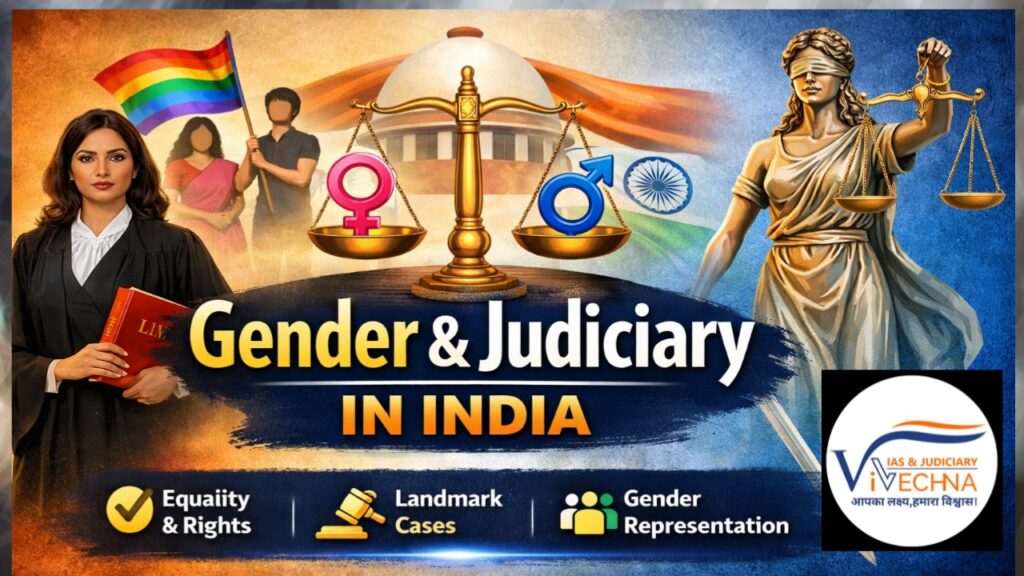
Gender and Judiciary in India is a critical topic that reflects how law and justice systems shape equality in society. In a country as diverse as India, ensuring gender justice is not just a legal obligation but a moral and constitutional commitment.
At Vivechna IAS and Judiciary Academy, understanding gender and judiciary in India is essential for aspirants preparing for UPSC, Judiciary, and other competitive exams. This article provides a clear, analytical, and SEO-friendly explanation of how the Indian judiciary contributes to gender justice.
What is Gender Justice in India?
Gender and Judiciary in India begins with understanding gender justice.
Gender justice refers to the fair and equal treatment of individuals regardless of gender—whether men, women, or LGBTQ+ persons. It ensures equal access to rights, opportunities, and legal protection.
Constitutional Foundations
Gender justice in India is rooted in key constitutional provisions:
- Article 14 – Equality before law
- Article 15 – Prohibition of discrimination
- Article 21 – Right to life and dignity
These provisions form the backbone of gender and judiciary in India, guiding courts to deliver equitable justice.
Role of Judiciary in Gender and Judiciary in India
The judiciary plays a transformative and proactive role in strengthening gender justice. Through progressive interpretations of the Constitution, courts have expanded rights and addressed gender inequalities.
Key Contributions:
- Expanding scope of fundamental rights
- Protecting marginalized gender groups
- Addressing social injustices through Public Interest Litigations (PILs)
- Promoting gender-sensitive legal interpretations
gender and judiciary in India,
Check this –National Commission for Women India
Landmark Cases in Gender and Judiciary in India
Several landmark judgments highlight the evolution of gender and judiciary in India:
1. Vishaka v. State of Rajasthan
- Established guidelines to prevent workplace sexual harassment
- Led to the POSH Act, 2013
2. Shayara Bano v. Union of India
- Declared instant triple talaq unconstitutional
- Strengthened Muslim women’s rights
3. Navtej Singh Johar v. Union of India
- Decriminalized homosexuality
- Recognized LGBTQ+ rights and dignity
4. Joseph Shine v. Union of India
- Decriminalized adultery
- Upheld individual autonomy and equality
These cases clearly demonstrate how gender and judiciary in India have evolved to promote inclusivity and justice.
Gender Representation in Indian Judiciary
An important dimension of gender and judiciary in India is representation.
Current Scenario:
- Women remain underrepresented in higher judiciary
- Limited number of women judges in the Supreme Court
- Better representation in lower courts
Impact of Increased Representation:
- Diverse perspectives in judgments
- Greater sensitivity in gender-related cases
- Strengthening public trust in judiciary
Challenges in Gender and Judiciary in India
Despite progress, several challenges hinder the effectiveness of gender justice:
Major Issues:
- Persistent patriarchal mindset
- Gender bias in legal processes
- Unequal access to justice for women
- Judicial delays
- Lack of awareness in rural areas
These challenges highlight the need for reforms in gender and judiciary in India.
Check this-Best Books for Delhi Judiciary Exam Preparation 2026
Measures to Improve Gender Justice
To strengthen gender and judiciary in India, the following steps are crucial:
Institutional Reforms:
- Increase women’s representation in judiciary
- Ensure transparent judicial appointments
Awareness & Training:
- Gender-sensitization programs for judges
- Legal awareness campaigns
Legal Infrastructure:
- Fast-track courts for gender-based crimes
- Strengthening legal aid services
Check this also-Translation for Judiciary Exams 2026
Conclusion
Gender and Judiciary in India is not just about laws—it is about ensuring dignity, equality, and justice for all. While the judiciary has made significant strides through progressive judgments, there is still a long way to go.
At Vivechna IAS and Judiciary Academy, we emphasize understanding such critical topics to help aspirants build strong conceptual clarity and analytical skills.
A more inclusive and gender-sensitive judiciary will ultimately lead to a more just and equitable society.